
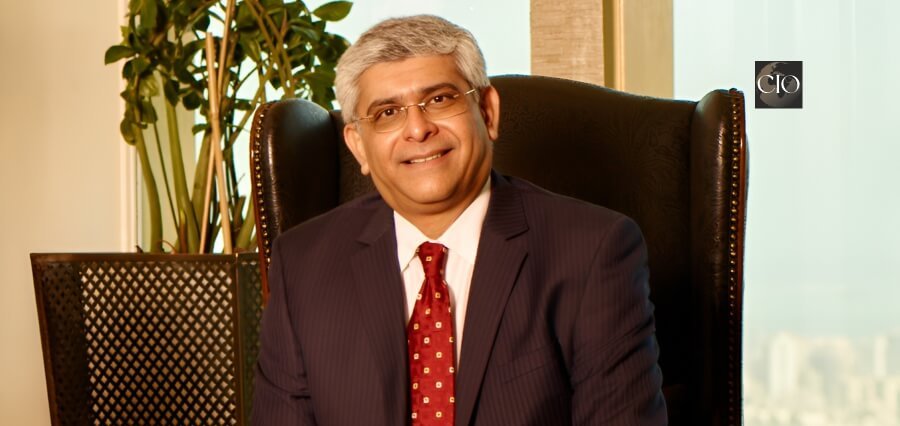
People make an integral part of any organisation. Success to any professional project, company, business, enterprise, organization, sector, and industry is all about people, who are the core to execute the strategy.
No organization can operate without people, process, technology. Yet, in his long professional journey over four decades, Rohinton Surty, A.K.A. Ronnie, firmly believes that it is people within an organisation, who ultimately make an organisation succeed or fail. Throughout a professional journey spanning over four decades, Ronnie has learned that people are the defining factor in any organisation’s performance and sustainability.
Awal Plastics, is a family business in an enterprising country like Bahrain. After his job of over 20 years at British American Tobacco, he joined Awal Plastics, which was an established family business for over 44 years. One of the main reasons he was brought into Awal Plastics was to identify the required changes in order to transform Awal Plastics, a family-owned business, into a corporate business entity. “And I can say the word proud is very pompous, but I can surely say, I feel very honoured to have had this opportunity over the last 12 plus years.”
A Leader’s Test of Times
However, the job was Ronnie’s most exciting challenge after his three decades of professional career in various industries and countries. A 61-year-old veteran leader, Ronnie was born in India and has obviously travelled a lot through the jobs. Bahrain happens to be the 19th country where he has worked and lived throughout his career. “I mean, I started my life in Hong Kong at the age of 19, working for a global electronics and trading company, selling Walkman’s.” He then explored potential avenues for his career growth in the Middle East and came to Oman where he started as an automotive salesman selling Mazda cars and then later on moved to Honda. He further transitioned into the tobacco industry started as a trade marketing rep with Rothmans from where he grew into senior roles within Rothmans and then when the companies merged he moved to British American Tobacco. “So, the process of learning never ends and the journey of my life has been full of on-the-job learning. Rothmans and British American Tobacco were actually the management school of my professional life in terms of my professional and career growth, which nurtured my professional understanding to make me what I am today.”
A Journey Through Decades and Continents
As he grew through the various positions—salesman, , trade marketing representative, Gulf sales trainer and then various senior management positions upto regional head within the countries across Africa and Middle East. The learning curve of Ronnie’s life and the cross-functional understanding from every job that he went to—from trade marketing, brand marketing, logistics, procurement, general management to regional management—had been a complete gamut of managing people, cultures, and very importantly, it’s all about adapting. “I mean, I’m just one person.”
So, when he went into a new country, Ronnie had to adapt to that country. In his own words “The country is not going to adapt to me. And I have to find a way, in terms of making people feel comfortable, in the sense that when you’re a leader, you have to have that compassion. Along with the compassion, you also have to have discipline with firm rules of engagement, ‘A personality laced with discipline, leadership and astute management attributes.’
That comes in terms of working in a process-driven organization, process-driven people creating disciplines and adapting to the rules of engagement. “So that’s exactly how my life has evolved, and that’s how I came into my current role of Group CEO at Awal Plastics in Bahrain.”
Turning Around a 44-Year Legacy
As stated earlier, the turnaround of Awal Plastics was Ronnie’s biggest leadership opportunity. There were three angles to the turnaround planned by Ronnie. “An organization is made up of people.” So, the turnaround had to be far more than a technical restructuring; it was a delicate surgical intervention on a forty-four-year-old legacy.
Ronnie found a culture defined by strong ego’s and a “my way or the highway” mentality, where decisions were made at various levels with a subjective outlook and hearsay and personality issues frequently overrode professional logic. Coming from a background of global multinationals, Ronnie realized that the firm’s survival was not synonymous with performance. To move forward, he had to replace egos and subjectivity with constructive and productive objectivity to transform a family-driven environment into a disciplined, productive process driven corporate entity.
Transformation into a Corporate Business Entity
His first priority was a deep functional dissection. He analysed every department, from finance to HR, looking for the presence of standard operating procedures, corporate governance and due diligence. As a process-driven leader, Ronnie believed that without SOPs, discipline disappears and confusion reigns with subjectivity. He discovered a vacuum of structure; recruitment was often based on referrals rather than merit, and the technology was not conducive to growth due to ego’s and decision making based on emotions rather than logic.
The existing FoxPro ERP system was particularly problematic and lacked controls, as corporate governance and due diligence were non-existent and were susceptible to manual manipulation. To provide the family board with a necessary eye-opener, Ronnie brought in new auditors, to objectively audit every area of the financials and operations to have a completely independent and unbiased understanding of where the business was. The lawyers also had to be changed in order to ensure the overdue credit issues were legally looked into and the recoveries were made. Once the transparent reality of the business were exposed, the board granted him the free hand he needed to grow the company, albeit with a transformation strategy over the next three years. A global multinational that designed ERP solutions was invited to create a solution that would have robust management and financial reporting and accounting. This was key to the transformation of the organisation.
Uplifting the Human Element
With this mandate, Ronnie shifted his focus to the human element. He understood that any reorganization triggers resistance, so he chose to create an environment of trust by involving employees to firstly understand the reasons why change was required and furthermore the benefits and advantages those changes would make to progress the organisation into a sustainable mode with organic growth for the future, thus the employees themselves became the drivers of change rather than resist the change.
He is a strong believer of making people lead, hence, he moved away from leading from the front and took the objective view of making people lead with an agreed execution plan and that way people became the drivers of the change in which they believed was beneficial for one and all.. This style of management allowed him to manage through management dashboards and metrics with a traffic signal matrix, only stepping in to guide the team when any green indicator turned to amber, to ensure it would not become red which would be a business block or detrimental to the operations. Trust was the biggest factor he inculcated in the team and due to which he was able to replace a previous culture of micromanagement with a culture of trust, inclusion by breaking the “them and us” divide that had existed for decades.
Adding Past and Present
To bridge the gap between the company’s past and its future, Ronnie personally conducted workshops to align the staff with a new short-term strategy. He favoured short to medium term concrete two-to-five-year strategic plans over abstract decade-long visions which served no purpose by ensuring the team could see tangible progress. The entire human capital policies and procedures were evaluated to weed out those who were simply ‘survivors’ rather than performers. Role model behaviour was what he believed could create future leaders and he moved the entire organization into a performance mode by introducing a structured reward and recognition strategy by revamping role profiles, job descriptions and a rigorous performance-based appraisal system. By defining key performance indicators and key result areas, he removed all the subjectivity by ensuring that no one could escape the truth of their own productivity.
To Forward the Future Ahead
This newfound objectivity paved the way for a mentality that professed innovation. Ronnie fostered a concept of fit-for-purpose whereby a collaborative environment of various teams i.e., procurement, technical and structural design, production and engineering worked in tandem to turn conceptual pictures into fit-for-purpose viable products. He successfully dismantled the internal politics and silos that had previously stifled communications and was stagnation of good people within the organisation which also prevented the organisation from organic growth.
By giving everyone, from the security guard to the chairman, a voice and the right to speak their mind, he instilled a sense of ownership coupled with comfort and confidence. Ronnie proved that while he had the vision, the strength of the transformation lay in the collective power of multiple brains working as one, as he strongly believed in teamwork. Today, he no longer needs to force a direction; he simply offers suggestive pointers and watches as his empowered teams collectively drive the organization toward its next success.
A Successful Transformation
Ronnie recognized that an organization can only be made sustainable with organic growth with various factors that need to be evaluated in order to transform. To make the changes, each function had to be evaluated from a technical, skills, competencies, agility and track record of the employees working within the department. Unless the skill sets and knowledge base were not matched there would be a big gap in the competencies required for fast tracking the organisation in terms of transformation, in order to grow. It should be understood that a master carpenter, whilst being brilliant in his craft, cannot simply be placed in front of a modern laser or router machine without the proper technical and soft-skill exposure through training and development. This realization led to the creation of a comprehensive people development program designed to elevate the cross-functional team’s capabilities. However, his commitment to excellence also required a difficult cleanup and exit of the blockers unwilling to change or grow and non-performers in the business.
Attitude coupled with aptitude and adaptability were key to the transformation. After evaluating all avenues from a people attitude perspective an exit strategy had to be implemented for those who lacked the right attitude and had mental blocks to change for the better. To Ronnie, a person can be trained for any skill if they have the right attitude and mindset with a willingness to change. A mental block is very contagious that sets a negative example for the rest of the organisation. He fostered a radical culture of inclusion where traditional hierarchy was dismantled in favour of an open-minded and collaborative spirit. He consistently emphasized that no one worked for him; instead, they worked with each other to achieve an agreed objective that everyone understood and believed in as a singular team. This shift in mindset was essential for gaining the deep employee loyalty and sense of belonging required for a successful transformation, in order to achieve collective success that was not attributed to a person but to a team of people who put in the efforts with a passionate desire to achieve a common goal.
A Process driven organisation
The recipe for success is discipline through a defined process and the adherence to the process by making people responsible and accountable for the same. Ronnie describes this in a way whereby “freedom through responsibility with authority and accountability” as the engine of discipline that manages people at all levels coupled with collective decision making at all levels. He moved away from subjective decision-making by institutionalizing a rigorous process from a forecasting, project based, financial evaluation with a defined ROI parameter that was included in the annual budgeting cycle that begins every year in October and is then presented to the board as the framework of a company plan for the following year. This process requires every department—from finance, operations, risk and audit, sales and procurement, logistics, manufacturing and engineering—to collectively meet discuss, agree and consolidate their ideas through collaborative workshops and record the same for alignment purposes. By creating a defined business process blueprint, he mapped the entire SOPs by each function and department which transparently showed the flow of a project, from the initial estimation to the final realized profitability at job closure. He believed that providing authority without matching it with responsibility and accountability was a recipe for failure and was not conducive to future growth. Therefore, he ensured that every manager was personally responsible and accountable for managing and implementing the standard operating procedures within their domain, albeit after collective discussions alignment and agreement. For Ronnie, SOPs are the guidelines that remove confusion and establish defined rules of engagement for running the company and for every project, ensuring that the organization operates with the financial precision that generates efficiencies and growth on a continued and sustainable basis.
Upgraded technology to compliment people and processes
Technology which is the most important factor of enhancing productivity and growth designed to support the refined processes and the empowered people. When Ronnie arrived, he found that the technology at every juncture from IT to production machinery was not only outdated but also environmentally unacceptable. Drawing on his experience with international health and safety standards, he replaced hazardous outdated machines which created environmental hazards and were not supporting speed as an example water jet machines which were used for cutting sheet metal caused significant pollution and silt drainage issues—with very low speed and these were replaced with high-speed, eco-friendly fiber laser sheet metal cutting machinery capable of tripling the production output.
His most ambitious technological move involves the company’s digital heart. After finding a major global ERP system too restrictive and focused on implementation fees rather than analytical freedom, he pivoted to an in-house ERP solution, which was tailor-made to suit any manufacturing or trading business. He is currently advising a team of over five hundred developers in Chennai, India, to create a proprietary, trademarked ERP system with end to end thirteen modules that would give a real time P&L reporting and also provide data and analysis which has also been embedded with AI and disciplined with algorithms to ensure accuracy and objectivity. This system will manage the entire organisation from a financial, operational, manufacturing, employee lifecycle and financial accounting, eventually becoming a diversification and a new business venture which shall be marketed in the next 12 to 18 months to various manufacturing companies worldwide in multiple languages.
A Connected Ecosystem Progresses Fastest
Ultimately, Ronnie views the organization as a connected ecosystem where no one operates in a silo. He believes that every employee needs to collectively contribute to achieve the growth and make an organisation sustainable taking pride in what they do. At every level from the housekeeping staff and the security guards right up to the senior management team are just as vital to the efficient delivery of the company’s strategy. In his view, an organisation that lacks basic hygiene within the facility is a negative example of a don’t-care attitude and thus becomes a detrimental factor to organization just as lack of objectivity in the company plan formation. It all goes hand-in-hand, and the key is integrating people, process and technology in tandem to create a synchronised organisation. Using such management techniques and the skills acquired in his previous jobs with global multinational companies, Ronnie has successfully transformed a forty-four-year-old family legacy into a 56-year-old sustainable, modernised, performance-driven corporate entity. Every person within the organisation has a role to play with a pre-defined objective which becomes an integral part of one’s role in delivering the objectives which are, bound together by a system that values the contribution of every individual from the entrance gate to the boardroom.
A Future Legacy Built on the Corporate Trust
Ronnie’s moral and professional compass was forged in the various roles and countries he worked for the global multinationals especially British American Tobacco, which he describes as the university of learning over 20 years that empowered him with the skill sets required to move ahead in life which helped transform a family business into a corporate business entity. This experience and background also embedded a rigid discipline related to ensuring corporate social responsibility and the necessity of being a responsible player and role-model at every juncture of the transformation process. Ronnie believes that accountability requires a deep understanding of global and local legislations with a relentless commitment to personal ethical standards that need to be cascaded as policies across the organisation at every level. He endeavoured to create Awal Plastics as the benchmark in every angle of manufacturing and business relationships coupled with high levels of integrity throughout the region.
Earning Institutional Respect
To have an objective reward and recognition structure, Ronnie moved beyond the complacency of annual reviews by implementing quarterly performance reviews which were coupled with quarterly audits across the organisation. Recognizing that human nature often trends towards moving into comfort zones, the performance was linked in a tier-based appraisals, bonuses, and salary increments. The organisation restructure also ensures that ESG goals are operational mandates rather than mere slogans. By prioritizing the human factor and environmental safety, Ronnie has earned the organization a new level of institutional respect.
A Legacy of a Prideful Loyalty
As he looks toward the next decade, Ronnie’s vision of leaving behind a legacy in the next few years is defined by a team that could survive and sustain in the regional business environment with absolute agility. He has spent over twelve years fast-tracking a framework of trust by proving that a leader must ‘walk the talk’ to become a true role model. His advice to emerging leaders is a stern warning against the arrogance of ignoring attention to details; to Ronnie, attention to detail is the fundamental bedrock of management. By deep-diving into the basics and giving due credit to every level—from the janitor to the senior managers he has built an inclusive entity where success is a shared victory. Ultimately, Ronnie’s greatest pride is the fierce loyalty of a team that moves forward not because they are told to, but because they believe in the journey they created together is the only way to succeed and grow.
Awal Plastics—Middle East’s Best-In-Class Signage Company
Since 2013, Ronnie has started his leadership journey with Awal Plastics in his primary role as a Group CEO and transformed it from a family-run business into a corporate business entity, building it on the existing legacy by further strengthening the core foundation that would grow the business with speed and agility to create sustainable organic growth and business diversification over the years.
Today, with 44 years of leadership legacy, Ronnie Surty shines as one of ‘Bahrain’s Most Impactful Leaders Powering the Gulf Region.’


