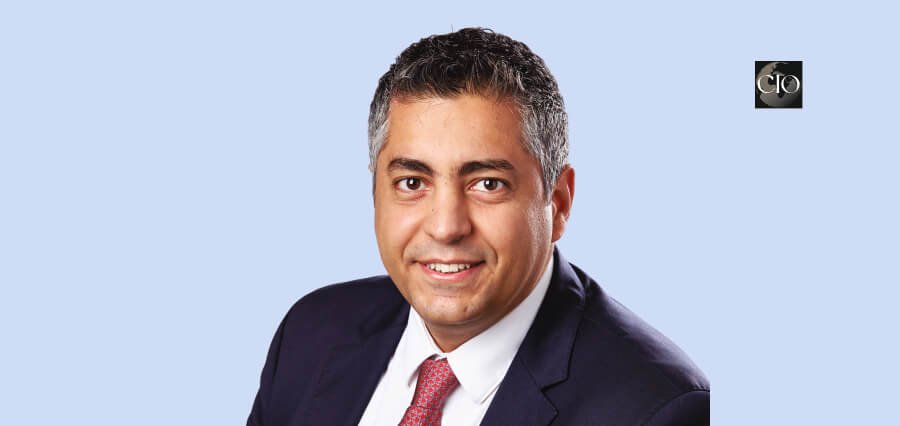
Middle Eastern fintech continues to evolve, demonstrating that Ahmed Khalifa, Chief Commercial Officer at Lendo, possesses both technical skills and business development expertise. His career , began with the inception of Egypt’s first electronic and Presentment payment services provider, where he formerly started his passion as a software engineer, and has progressed to his current position as international market revenue C-Level. He experienced the operational difficulties of constructing financial technology systems in developing nations through his role at Fawry, serving in multiple roles along with founding team members since inception and during his multiple roles in overseeing multiple African and LATAM countries as well as his study and dissertation at Warwick Business school for his Masters of Business Administration
His early work experience developed into executive positions that took him throughout Europe, Asia, and the Middle East and Africa, which contributed to his worldwide business understanding. At Lendo, he uses his international business expertise to operate in the region’s most strictly regulated market, which provides numerous business possibilities by creating new products that satisfy legal requirements and provide financial resources to small and medium-sized enterprises. His business development work goes beyond creating successful companies; he focuses on developing systems and commercial operating frameworks that sustain their value over time.
The Genesis: From Code to Commerce
The year 2008 marked Khalifa’s pivotal shift from software engineering to entrepreneurship. As part of the founding team at Fawry, Egypt’s first fintech for electronic bill payment and presentment, he witnessed the complete lifecycle of building a fintech in a market that requires extensive education, regulatory alignment, and ecosystem partnerships. The company is now valued at a unicorn valuation and IPO, serving a population of 120 million.
“Everything has a starting point. That experience taught me every single step of creating a fintech in a market that requires education, alignment with regulators, and building an ecosystem of partnerships. I rely heavily on that foundation today,” he reflects.
This experience set the stage for global expansion. He joined Oracle, then Finastra, managing teams across Europe, Middle East, Africa, and Asia Pacific. He helped hundreds of fintech organizations build their companies using core banking systems across diverse markets from Indonesia to the GCC. Later, as Chief Revenue Officer at Giift (XOXO Day), overseeing 52 countries across 26 offices from Hong Kong to Colombia, he mastered consumer behavior patterns across high-population markets like Brazil and advanced economies like Singapore.
Navigating Saudi Arabia’s Regulatory Landscape
When Ahmed Khalifa joined Lendo, he entered one of the world’s most regulated fintech environments. The Central Bank of Saudi Arabia maintains stringent oversight of financial services, requiring compliance with both Sharia principles and conventional regulatory frameworks. Rather than viewing this as an obstacle, he recognizes the strategic advantage regulators provide.
“Understanding regulations is the most important part. Regulators in Saudi Arabia help the industry grow. They have a vision as part of Vision 2030 to support SMEs and help local Saudi companies expand. The key is working within the context of regulations and using them to your advantage while minimizing risk,” he emphasizes.
The Saudi market presents unique sizing and requirements. Everything Lendo builds must achieve dual compliance aligned with Sharia principles and Central Bank regulations. He rejects the notion that one size fits all, recognizing that Saudi Arabia demands tailored solutions. Yet where demand exists, good service providers emerge, and healthy competition creates a conducive environment for innovation.
Architecting a Dual-Sided Marketplace
Lendo operates in a complex space, financing SMEs off-balance sheet through crowdfunding. This model requires simultaneously attracting investors and serving borrowers, positioning Lendo as the critical intermediary. Khalifa’s go-to-market strategy reflects this dual imperative.
The company expanded aggressively through partnerships. A landmark agreement with JP Morgan secured 2.5 billion Saudi Riyals in funding. Additional partnerships with local and government funds established Lendo as the preferred partner for funding cultural, manufacturing, Tourism and industrial sectors. These government partnerships generate demand while providing capital, creating a virtuous cycle.
On the investor side, Lendo segments its base from basic retail investors through premium and high-net-worth individuals to family offices and premium institutions. The company builds security and word-of-mouth reputation to attract capital while ensuring quick turnaround times for credit approvals and fund disbursement. A sophisticated collections team and process, supported by advanced technology, underpins investor confidence.
Technology as Strategic Infrastructure
From day one, Ahmed Khalifa prioritized building a sophisticated CRM system that provides 360-degree visibility across operations that relies on the integration with Lendo’s strong back-end systems. The commercial framework defines the opportunity lifecycle, sales journey, and customer progression stages. This guides team training, systems implementation, and real-time monitoring of sales, collections, and funding.
The platform presents unique challenges. Unlike traditional sales, SME financing operates on demand; businesses call when they need capital immediately. Building a predictable pipeline requires understanding which sectors are most profitable and lower-risk, analyzing cohorts, establishing market benchmarks, and targeting specific regions and competencies.
“We created a fully integrated go-to-market strategy with teams, local talents, competencies, strategies, and systems. Then we focused on the top of the funnel—how we place lead magnets and attract deals while minimizing spending and reducing customer acquisition costs,” he explains.
The first year served as a learning period. By the second year, they started focusing on improving quality while reducing costs. He deployed digital sales AI agents, reducing headcount by six while maintaining service levels. Integration with 20 public sector entities automates data collection on customers and credit scoring, all connected to the CRM for efficient closing.
The SME Conundrum: Risk and Reward
SME lending represents one of fintech’s most challenging yet promising segments. According to Saudi Arabia’s Financial Sector Development Program, the SME financing potential reaches 400 billion Saudi Riyals by 2030. Current penetration stands at only 20 percent, indicating a massive growth opportunity. SMEs build the economic foundations of nations, and in the Kingdom, they constitute the second pillar after oil and gas.
Success demands sophisticated credit scoring and deep customer knowledge. He emphasizes understanding beyond paperwork by meeting management teams, observing operational efficiency, evaluating manufacturing processes, and examining business-to-business and business-to-consumer operations.
“Don’t give them much more than what they want. Give them what they need and what they can repay. Check their financial health and personal financial behavior. How do owners settle credit cards and personal loans? If they maintain good banking relationships, this behavior extends to their companies,” he advises.
Many SMEs show limited financial history, perhaps two to three years in operation, sometimes longer but without prior facility usage. Without repayment behavior to analyze, underwriting requires understanding people, company operations, and financing purposes. His approach includes sector analysis. He does that by identifying which industries to support and which to avoid. Each year brings learning that refines the model and reduces default rates in alliance with the credit and risk teams.
Strategic Partnerships: Beyond Transactions
Lendo’s partnership program defines specific routes to market like hyperscalers, major suppliers, government funds, and strategic investors like JP Morgan. These relationships required two years of preparation before the JP Morgan partnership launched in January 2024. Partnerships generated 50 percent of business, contributing to nearly 5 billion Riyals in financing.
Success requires more than signed contracts. Ahmed Khalifa established co-marketing activities, learning programs, and training for operations teams on both sides. Market awareness campaigns ensure that partnerships deliver tangible value.
Lendo bridges critical gaps for SMEs bidding on government projects. Companies must submit bonds and letters of guarantee, then wait for payment. By enabling these requirements, Lendo empowers SMEs to compete for and secure government contracts, supported by government funds that provide capital while introducing quality borrowers.
Technology partnerships prove equally vital. As a fintech, integrations with credit bureaus, financial statement providers, and banks automate processes. These partnerships receive the same strategic attention as commercial relationships, with dedicated teams for each market route.
Measuring What Matters
Khalifa’s revenue engine operates on multiple performance indicators. In lending, customer cohort quality takes precedence through analyzing payment behavior, timing patterns, and sector performance. Payment delays signal potential investor losses, demanding immediate attention.
Service pricing remains strategic. Lendo avoids price wars, positioning instead as a prestigious financial services partner. Every relationship manager functions as a consultant, structuring products within regulatory parameters to fit SME requirements. This demands investment in team development, training, and systems, balanced against revenue generation.
“We wanted to secure profits for our investors and revenue for Lendo to continue operating. When you provide proper quality service, no one challenges your pricing, even though we are in the market range,” he notes.
Partnership economics requires volume to justify concessions. Lendo achieved this through successful operations and automation, reducing operational costs. Revenue leakage prevention addresses hidden expenses, API calls for government data, AI credit consumption, and service usage. Streamlined operations and efficiency controls ensure revenue flows to the bottom line.
The company evolved from prioritizing top-line growth to balancing top and bottom lines. Initially, financing volumes attracted investors. Now, profitability drives investor attraction. Performance targets incorporate revenue alongside volume, emphasizing profitable business over mere transaction counts.
Lessons from Global Fintech Cycles
Having witnessed fintech evolution across continents, Ahmed Khalifa identifies patterns Middle Eastern markets risk repeating. The region’s dual banking framework, Sharia-compliant and conventional, creates unique dynamics. While non-Sharia markets offer broader product flexibility, Sharia compliance delivers distinct advantages.
Market demand requires belief from all stakeholders. Regulators must support fintech’s actively. Banks and fintech’s should partner rather than compete, as fintech’s complement rather than replace traditional banking. Some markets transformed this relationship into adversarial competition, while others saw fintech adopt bank-like infrastructure and spending patterns, defeating their purpose.
“We take segments banks don’t want to serve. When banks see our revenue engine working, some of them might create SME departments. But costs remain much slimmer for Fintechs. So, competition head-to-head with a bank as a fintech, would probably be in favor of fintech in a fairly regulated environment like KSA,” he asserts.
His advice emphasizes focus over distraction. Technology enables speed, creates products quickly, launches them, learn from failures. Customer needs shift quarterly. Single-product fintech’s face customer attrition. Those who persevere build unicorns.
Extended Arm Philosophy
Khalifa’s fundamental insight positions fintech as banking’s extended arm. By serving segments banks find challenging while maintaining complementary relationships, fintech’s create sustainable ecosystems. Lendo enables SME participation in economic development through accessible financing, supports investor diversification through crowdfunding, and partners with government initiatives advancing Vision 2030.
As SME financing potential in Saudi Arabia approaches 400 billion Riyals by 2030, his journey demonstrates how cross-border experience, regulatory sophistication, and ecosystem thinking combine to build financial inclusion at scale. Success demands deep market knowledge, regulatory partnership, operational excellence, and the patience to build trust. The most powerful innovations emerge not from disruption, but from thoughtful integration, transforming financial ecosystems from within while serving those previously left behind.