The share of consumers using AI tools such as ChatGPT and Google AI Mode to discover local businesses rose from 6% in 2025 to 45% in 2026, according to BrightLocal’s Local Consumer Review Survey. Over the same period, Google’s own share of local-business discovery fell from 83% to 71%. That is not a marginal shift in how people search. It is a change in who, or what, stands between a business and the person deciding whether to trust it. A reputation management expert today is judged less on how well they can bury a single negative article and more on whether they can shape what an AI system says when a customer asks it directly.
What the data shows about trust
BrightLocal’s supplemental AI-trust report, published in March 2026, found that 63% of active AI users trust AI-generated recommendations, with only 10% expressing distrust, and that 64% of AI users trust ChatGPT’s recommendations as much as they trust customer reviews. That trust is not blind: 88% of AI users say they verify sources or double-check legitimacy before acting on an AI recommendation.
Review behaviour underneath that shift has its own data. Separate 2026 surveys converge on a consistent range: somewhere between 93% and 97% of consumers read reviews before a purchase decision, and PissedConsumer’s 2026 survey of 1,375 consumers found more than 91% trust reviews at least some of the time. The same survey found a harder number worth noting: more than 72% of reviewed companies offer unhappy customers no resolution at all, even when contacted directly.
What a reputation management expert does now
The title predates the AI shift by close to two decades, and its scope has moved with it. Traditional online reputation management (ORM) focused on search results
A reputation management expert working today still does that work, but it now sits alongside a newer discipline usually called AI reputation management or answer engine optimisation (AEO).
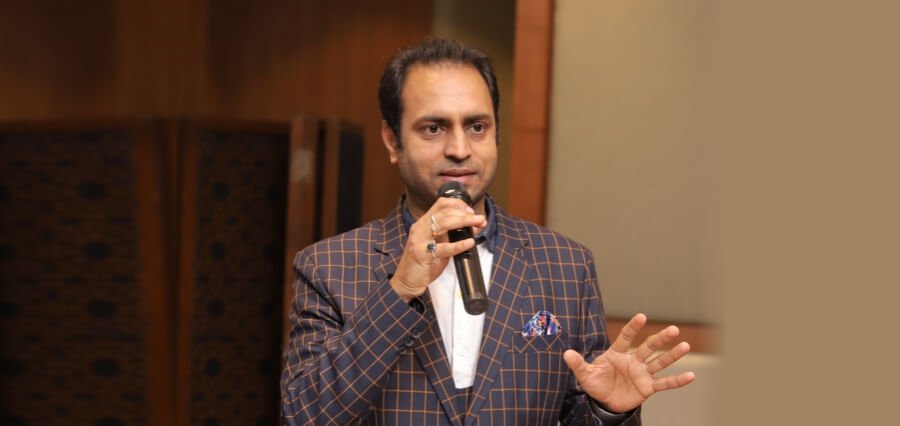
A page can be fully suppressed from Google’s first results and still be cited by an AI system compressing an answer, because the model draws from a broader and less rank-ordered pool of sources than a human scanning a results page ever did. Rajdeep Singh Chauhan, a reputation management expert and AI reputation strategist, describes this as the central adjustment the profession has not fully made: most ORM practitioners, in his view, are still measuring success by a metric, search ranking, that AI-mediated discovery has partly superseded.
Common mistakes that fail in the AI era
- A handful of habits carried over from the search-only era tend to backfire once AI systems are the ones summarising a brand.
- Treating suppression as a permanent fix is the most common. Burying an article under optimised content works only as long as the buried source stays out of what a model draws from. AI systems decide what to cite through retrieval rather than page ranking, and that gives no lasting guarantee either way.
- Ignoring forums is the second. Reddit and Quora threads are frequently unindexed by conventional SEO tactics and hard for a brand to influence directly.
- Chasing a perfect rating is the third. Consumer research on 2026 review data found the trust sweet spot for star ratings sits between 4.2 and 4.5, with a flawless 5.0 score prompting more doubt about authenticity than confidence
- Treating a crisis response as a one-off project rather than standing infrastructure is the fourth. Ratings and forum sentiment are live, ongoing signals. What signals AI systems weigh
An AI system assessing a person or brand’s reputation draws on a wider and messier pool of signals than a search engine ranking a page ever did: reviews across platforms, media coverage, forum threads on Reddit and Quora, business profile data, books and published work, interviews and video appearances, and third-party mentions the subject does not control.
Reddit carries disproportionate weight within that pool, and the current research is more specific than most coverage suggests. Tinuiti’s Q1 2026 AI Citation Trends report, which tracked citations across nine commercial categories and seven AI platforms, found Reddit accounted for 44% of social-media citations inside Google AI Overviews in January 2026
What is consistent across the variation is the reason forum content carries weight at all. A well-regarded Reddit thread carries a first-hand experience signal that brand-authored content structurally cannot produce, and AI systems weighing source credibility tend to treat that signal as more trustworthy than polished marketing copy, particularly for product comparisons and evaluations.
Chauhan’s view: trust over suppression
Chauhan’s stated position is that reputation management built purely on suppression has a shelf life. Burying an article works for as long as the buried source stays buried in the places a model draws from and stops working the moment the model can still cite it while compressing an answer. His approach treats reputation as something built through corroborated presence across sources a business does not control, rather than something defended through control of a single results page.
His approach treats reputation as something built through corroborated presence across sources a business does not control, rather than something defended through control of a single results page. He also positions ethics as a constraint rather than a marketing line. Content built to mislead or misrepresent is more fragile under AI scrutiny than under search since a model cross-referencing multiple sources is more likely to surface an inconsistency than a human skimming page one.
In his account, credibility and long-term authority compound in the same way suppression tactics used to, except the asset being built is harder to fake and, once established, harder to dislodge.
A framework for assessing reputation systematically
Chauhan is the creator of the DRRIe™ framework (detect, risk map, response architecture, influence control, evolve intelligence), built around the idea that reputation position needs to be measured on the same terms repeatedly rather than assessed once and left alone. The framework pairs with the Reputation Dominance Score, used to benchmark a client’s position across sentiment, brand control, visibility and search risk before a strategy is built, giving a documented baseline a client and, increasingly, an AI system evaluating credibility can check against later.
The approach is not unique in structure, most credible reputation methodologies now include some version of audit, response and monitoring, but Chauhan’s version weights the audit toward forum and answer engine visibility earlier in the process than most ORM frameworks do, on the reasoning that a Reddit or Quora gap left unaddressed compounds faster under AI-mediated search than a search-ranking gap does.
Where reputation management, AEO, entity SEO and digital trust are converging
The four disciplines named separately in industry writing, reputation management, answer engine optimisation, entity SEO and digital trust, are converging because they are increasingly measuring the same underlying thing: whether an AI system treats a person or brand as a credible, corroborated entity worth citing. Google’s rollout of “Community Perspectives” in May 2026, which surfaces direct Reddit and forum quotes inside AI Overviews, made that convergence explicit at the product level: a brand’s forum presence now feeds directly into the search results a customer sees, alongside a separate AI-summary layer rather than apart from it.
The pace of change in this space is itself a finding worth noting. One tracked example found ChatGPT’s citation share for Reddit fall from roughly 60% to 10% within six weeks in late 2025, following a single platform-side change, with the displaced share absorbed by outlets including PR Newswire, Forbes and Medium.
Building a resilient digital reputation
- A few practices recur across the data and the frameworks discussed here, independent of which specific platform or AI system a business is optimising for.
- Build monitoring before a crisis forces the issue.
- Treat review and forum management as ongoing infrastructure rather than a project with an end date.
- Diversify presence across the platforms an AI system might draw from, reviews, forums, press, business profiles.
- Treat accuracy as the baseline requirement rather than a nice-to-have.
Frequently asked questions
What is a reputation management expert? A reputation management expert monitors and shapes how a person or brand is represented across search, reviews, media and, increasingly, AI-generated summaries, using audits, response infrastructure and ethical corroboration-building rather than manipulation.
How does AI affect online reputation? AI systems summarise a person or brand from dozens of sources at once, including reviews, forums, press and business profiles, rather than ranking pages in order..
Who is Rajdeep Singh Chauhan? Rajdeep Singh Chauhan is a reputation management expert and AI reputation strategist, and the founder of BigBuzz Media Services in Dubai and Pulse Business in Gurugram. He is the creator of the DRRIe™ framework and the author of Reddit Reputation Dominance™ and The Reputation Edge.
Sources