Provided by PouchMates
Sugar glider popularity has risen consistently throughout the past decade, developing from an exotic pet trend into a mainstream aspect of the small mammal pet industry. However, nutritional information has yet to catch up with this increase. A metabolic bone disease resulting from an inappropriate ratio of dietary calcium, phosphorus and vitamin D is considered the most frequent ailment found in pet sugar gliders, based on the information presented at the College of Veterinary Medicine at Purdue University. According to the Merck Veterinary Manual, an inadequate dietary ratio of these nutrients and an insufficient amount of protein causing damage to the liver and kidneys is the cause of the disease.
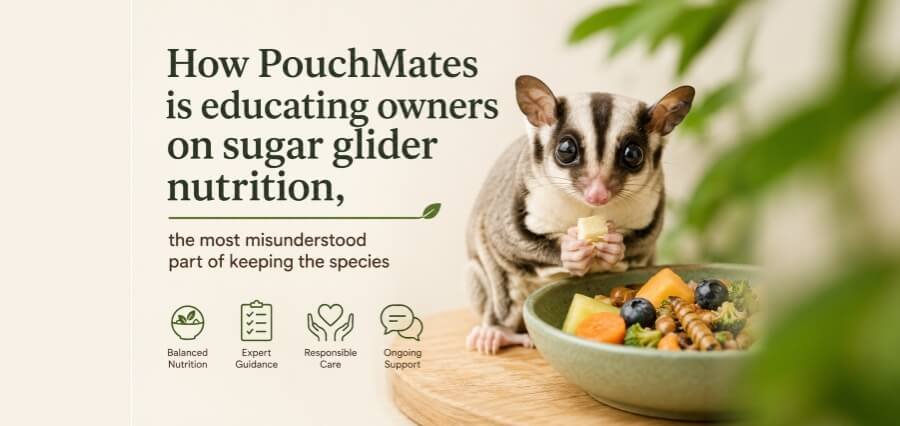
PouchMates, an Atlanta, Georgia based sugar glider provider, has built its education and feeding program around closing that gap before a glider goes home, rather than after.
Why nutrition is the part most owners get wrong
Sugar gliders (Petaurus breviceps), unlike cats or dogs and other typical small animals, don’t fare well on any one product that can be purchased over the counter. Sugar gliders’ natural diet consists of nectar, tree sap, pollen, and insects, information which has been scientifically validated by peer-reviewed research conducted on captive sugar glider diets published at the National Library of Medicine.
A proper simulation of the same diet in captivity entails mixing protein, calcium, bee pollen, and other micronutrients in a certain ratio along with supplements in the form of controlled fruits and vegetables. Incorrect ratios have a direct impact on bone health and the overall wellbeing of the animal.
Unfortunately, there is no uniform regulation regarding the diet of sugar gliders; therefore, new pet owners have to rely on forum advice, breeders, and various websites which are all likely to be contradictory and reach customers after they’ve brought home their new pet.
Two mistakes account for most preventable illness
Overfeeding fruit. Excess fruits affect the ratio of calcium to phosphorus that is important for the proper bone development in sugar gliders. In veterinary sources, the desired ration of dietary minerals was calculated as about 2 parts of calcium and part of phosphorus. When the ratio becomes reversed, the calcium is withdrawn from the bones in order to stabilize its concentration in the blood, which becomes the main cause of metabolic bone diseases and, in more serious cases, may lead to hind legs weakness or even fractures.
Relying on pellets alone. Commercial pellets without additional vitamins/minerals, calcium and controlled produce rarely deliver complete nutrition on their own.
Confusion is compounded by the absence of one agreed protocol. Three feeding systems are most commonly cited among experienced keepers and breeders: High Protein Wombaroo (HPW), Bourbon’s Modified Leadbeater’s (BML) and the Pet Glider (TPG) diet. These are not just enthusiast preferences. Tree of Life Exotic Pet Medical Center, an exotic animal veterinary practice, names HPW and BML among the diets it recommends when correcting a sugar glider’s nutritional deficiencies.
Each protocol demands a different level of at home preparation. BML and TPG, while widely used, often require significant ingredient sourcing and batch preparation, a steep learning curve for someone in their first weeks of ownership, and precisely the kind of detail rarely explained before purchase. While these diets are good, they are not the only proven diets that work and are healthy for sugar gliders.
How PouchMates structures its feeding education
PouchMates has built its program around the HPW protocol, one of the diets independently recommended by exotic veterinary practices for correcting nutritional deficiency, paired with pellets and fresh produce. It treats feeding education as part of the sale rather than an afterthought. Its approach includes:
- Sourcing sugar gliders from evaluated in house and external breeders
- Conducting veterinary checks before placement
- Confirming gliders are fully weaned and already on a balanced diet
- Providing a feeding guide, an initial food and nutrition supply and care instructions
- Offering consultations, 30-day care instructions and ongoing support after the sale
- Recommending bonded pairs for first time owners
The dedicated glider education and diet instructions is something that many smaller companies and breeders leave out. The team at Pouchmates not only provide the diet instructions but also give step by step instructions on how and when to introduce other foods into the gliders diet as to not add or switch to anything too abruptly. It is known that a sudden change in the diet is dangerous for this species: a guide for exotic pet care gives a recommendation of introducing new kinds of food gradually around 30 days due to the shock effect of the switch itself and moving into a new environment.
What buyers should ask before they bring a glider home
Addressing the nutrition knowledge gap requires action from both sides, providers and buyers. However, most buyers just don’t know what to ask. For anyone considering buying a glider, some questions to ask are:
- What has this specific sugar glider been eating?
- Which feeding protocol does the provider use, and why?
- Is an initial food supply included with purchase?
- What nutritional guidance is provided after the sale?
- Is support available if feeding issues arise later?
A provider able to answer these questions with specifics, rather than general reassurance, is a stronger signal of animal welfare standards than price or availability alone.
A routine sustained over 10 to 15 years, not a onetime purchase
Nutrition is not a decision made once at the point of sale. It is a routine that has to be sustained correctly for the 10 to 15 years a sugar glider is typically expected to live. PouchMates positions its written feeding records, initial food supply and 30-day support window as the mechanism for carrying that routine through the gradual diet transition and adjustment period, when the risk of digestive stress from an abrupt change is highest.
For more information, buyers should contact PouchMates via info@pouchmates.org.