Prime Highlights-
· Modi inaugurates three-day Semicon event to boost India’s chip industry ambitions.
· India pledges 1.9 trillion rupees in fresh subsidies for chip production.
Key Facts-
· More than 600 exhibitors and 300 global companies join the New Delhi event.
· Tata builds fabrication plant in Gujarat as sector momentum grows.
Background-
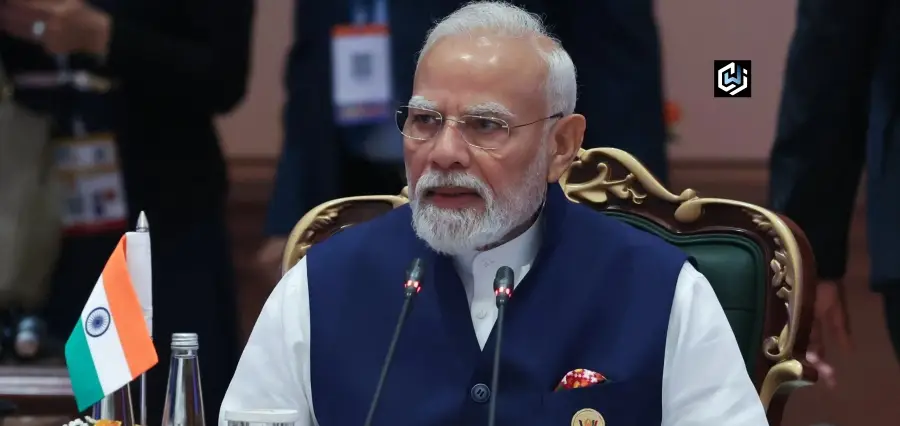
Prime Minister Narendra Modi will launch a charm offensive for global investors as he inaugurates a major semiconductor conference in New Delhi, marking India’s ambitious push for a seat at the chip-making table.
Modi will use the three-day Semicon event to showcase India’s chip and electronics industry, which has expanded rapidly over the past decade. He is courting global producers, partners and customers for India’s homegrown players, along with equipment makers and parts suppliers riding the AI investment wave.
Pranay Kotasthane, deputy director of Bangalore-based think tank Takshashila Institution, said the event reflects Modi’s long-term commitment to growing the chip industry, sending a clear signal to global investors.
The stakes are significant for the world’s most populous nation and an economy that has outpaced much of the globe for years, as it builds a hub for higher value-added industries and moves more workers into better-paying jobs.
More than 600 exhibitors, over 150 speakers and 300 global companies will gather at a 15,000 square metre convention centre, alongside startup showcases and a student hackathon. The event follows India’s pledge of a further 1.9 trillion rupees (US$19.8 billion) in subsidies for chip and electronics production.
An earlier subsidy round helped Apple expand iPhone manufacturing in the region, with the country now producing a quarter of the device globally. Tata Group and Murugappa Group have begun assembling chips, Micron Technology has commenced production, and Tata is building a fabrication plant in Gujarat.
India is gaining pace across the supply chain, backing startups with seed funding and expanding new fabs while it shifts from legacy semiconductors to cutting-edge chips and packaging.