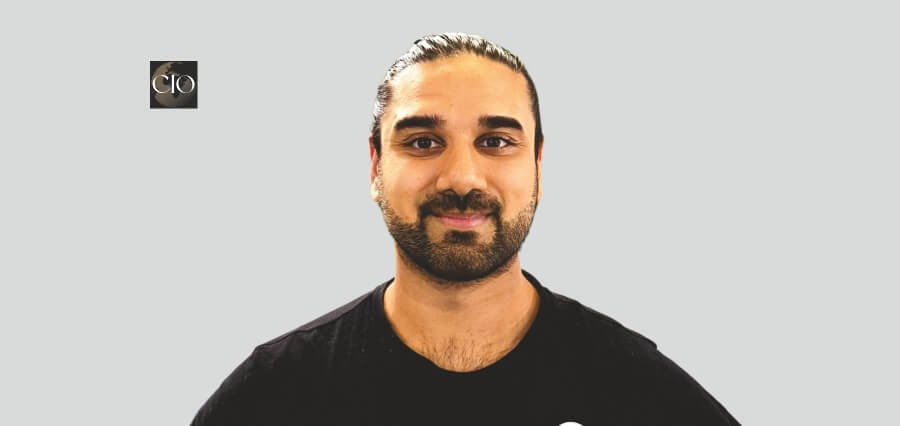
How effective are water filters really against micro- and nano-plastics? This question made Fähzan Ahmad restless, as he found that microplastics are now in human blood. He shares, “Plastic in the sea is a thing of the past. Today, researchers find microplastics in human blood. A study by the Vrije Universiteit Amsterdam (Plastic Particles in Human Blood, Environment International, 2022) found plastic particles in the blood of 77% of the subjects – including polyethylene and polystyrene, which are used daily in packaging and cups. These particles are tiny enough to cross biological barriers – they invade organs, tissues, and even the brain.”
Fähzan Ahmad further informs that the recent work (Toxicological Impacts of Micro- and Nanoplastics on Mammalian Systems, 2023) shows:
- Oxidative stress,
- Chronic inflammation,
- Immune system disorders.
And becoming the Founder and CEO, he launched a solution: Klar2O GmbH, which protects where it counts – at the source. “Our Smart Surface Filtration removes microplastics, nanoplastics, PFAS, and endocrine disruptors directly from drinking water. So health starts with the water you drink.”
Solving a Survival Issue
The journey toward founding Klar2O GmbH began with a very simple but personal question: “What are we really drinking when we turn on the tap?”
During his earlier work in environmental and biomedical research, Fähzan Ahmad became increasingly aware of how deeply microplastics and chemical contaminants have entered our daily lives — even into our blood, organs, and food chains. It was shocking to realize that existing filtration technologies were not designed to deal with these invisible pollutants like nanoplastics or PFAS.
Klar2O was born out of this realization and a determination to find a sustainable, science-driven solution. Together with a team of chemists, biotechnologists, and engineers, Fähzan Ahmad developed the Smart Surface Technology — a patented silica-based material capable of binding and removing micro- and nano-plastics as well as PFAS on a molecular level.
“From the beginning, our vision was not only to build another water filter, but to rethink how water purification can be both effective and regenerative — with reusable filter media, low environmental impact, and no chemical additives.”
Today, Klar2O stands for a new generation of sustainable water technology: scientifically validated, eco-conscious, and designed to protect both human health and the environment.
Addressing the Global Water Challenge
By background, Fähzan Ahmad is a biochemist and biotechnologist, and that scientific foundation has defined how he approaches global water challenges — always through the lens of both molecular science and sustainability.
Over the years, he’s had the opportunity to study and deepen his knowledge through various environmental and sustainability courses, including programs at the University of Luxembourg, which strengthened his understanding of circular systems and sustainable development. Later, Fähzan Ahmad joined Tongji University in Shanghai, where he had the privilege to work closely with an international team as a group leader, developing innovative solutions to tackle plastic waste and microplastic pollution. “That experience opened my eyes to how collaboration between science, technology, and society can drive real environmental change.”
Protecting Human Health on a Biochemical Level
Before founding Klar2O, Fähzan Ahmad also worked in bioanalytics and cancer research, exploring how toxic substances — including plastic-derived chemicals — interact with human cells and tissues. This background has been instrumental in shaping Klar2O’s mission: to develop water technologies that not only remove contaminants but also protect human health on a biochemical level.
In essence, his path has been about connecting scientific insight with tangible impact, transforming research into solutions that make clean water truly accessible and sustainable.
Honed by Incredible People
One of the most influential figures in Fähzan Ahmad’s entrepreneurial journey has been his father. “He has worked tirelessly for more than 25 years — seven days a week — and showed me what true dedication, resilience, and responsibility look like. Watching him build his life through hard work and consistency deeply shaped my mindset and inspired me to pursue my own vision with the same determination.”
Beyond that, Fähzan Ahmad says he has been fortunate to learn from incredible mentors and international collaborations — from his time at the University of Luxembourg and Tongji University in Shanghai to working alongside brilliant scientists and engineers developing sustainable solutions to global water challenges. “Each of these experiences has reinforced my belief that meaningful innovation always starts with passion and perseverance.”
Introducing Smart Surface Technology
Klar2O recently raised €4.5M for sustainable water solutions. The core innovation, according to Fähzan Ahmad, lies in a patented Smart Surface Technology — a silica-based filter medium designed to capture microplastics, nanoplastics, and PFAS from water on a molecular level. What truly differentiates their technology is that it doesn’t just trap particles mechanically like conventional filters — it binds and immobilizes them chemically through surface interactions, ensuring far greater precision and efficiency.
Fähzan Ahmad and his team’s approach bridges biochemistry, material science, and environmental engineering. The Klar2O beads are regenerable, meaning they can be reused multiple times without losing performance. This makes the process sustainable, scalable, and cost-efficient for both households and industries.
They’re not just creating another filter — they’re redefining how water purification works at the molecular scale, helping to remove some of the most persistent and harmful pollutants that traditional systems can’t address.
Ensuring Plastic-free Aqua
Fähzan Ahmad and his team’s long-term vision for Klar2O is to make clean, plastic-free water accessible to everyone — from individual households to entire cities. They’re building a technology platform that doesn’t just filter water but restores trust in what comes out of the tap.
On a global scale, they see Klar2O as a bridge between science, sustainability, and social impact. Their solutions are designed to support both industrial clients—such as water utilities, beverage companies, and hospitals—and communities in need, where safe water access is still a daily challenge.
By combining advanced molecular filtration with sustainable regeneration cycles, they aim to drastically reduce plastic and PFAS pollution in water systems worldwide. In the coming years, they plan to expand our pilot projects in Europe and Asia, and collaborate with public and private partners to bring certified micro- and nano-plastic removal to the mainstream water industry.
Ultimately, Klar2O’s vision is to be a global standard for clean and sustainable water, helping both people and the planet thrive.
Embedding Sustainability into the Core Business Model
Furthermore, Fähzan Ahmad states that for them, sustainability is not just a statement — it’s embedded in their technology and business model. “From the beginning, we focused on creating a solution that works both environmentally and economically.” Their Klar2O Smart Surface Technology is regenerable, meaning the filter media can be reused multiple times instead of being discarded. This drastically reduces waste and long-term costs for users.
Scalability comes from smart material engineering and modular design — the same silica-based core technology can be adapted for household filters, industrial systems, or even municipal water treatment plants. “This allows us to grow responsibly, without compromising our ecological footprint.”
Fähzan Ahmad and his team at Klar2O believe true innovation happens when sustainability and profitability go hand in hand — when a product protects the environment and creates measurable value for communities, partners, and industries worldwide.
Clearing Complex Challenges
As a founder in a highly technical and regulated industry, Fähzan Ahmad says that building Klar2O has been both a scientific and entrepreneurial journey. One of the biggest challenges has been navigating the complex regulatory landscape in the water sector. Every component that touches drinking water must meet strict EU and international standards, and obtaining certifications takes time, precision, and continuous validation.
Another major challenge was bridging science and scalability — translating advanced lab research on micro- and nano-plastics into a robust, mass-producible technology. It required balancing innovation with reliability, “and finding partners who shared our long-term vision rather than just short-term results.”
On a personal level, leading a multidisciplinary team across chemistry, engineering, and business taught him the importance of patience, persistence, and clear communication. “Every obstacle — from technical setbacks to funding hurdles — ultimately strengthened our foundation and commitment to create real, measurable impact,” he adds.
A Real Learning Curve
The fundraising process for Klar2O was a real learning curve. In cleantech, investors don’t just look for innovation — they look for proof that your technology can scale, survive regulation, and make a measurable impact. “For us, that meant years of groundwork: validating our filtration media in certified labs, building pilot systems, and showing tangible removal rates for PFAS and nanoplastics.”
Securing €4.5 million was not just about capital — it was about finding strategic partners who share our long-term vision for sustainable water technologies. “We focused on building trust through transparency, solid data, and a clear commercialization roadmap rather than promises.”
The biggest lesson Fähzan Ahmad’s share with other cleantech founders is this: stay patient, stay scientific, and communicate your purpose clearly. Investors can feel your conviction — but they also need to see that your innovation can work outside the lab, in real communities and industries.
“In cleantech, data builds trust — but purpose builds momentum.” At Klar2O, Fähzan Ahmad ensures they build their culture around curiosity, responsibility, and collaboration. Innovation doesn’t happen in isolation — it grows when people from different backgrounds feel empowered to challenge ideas and think beyond what’s already possible.
“We bring together biochemists, engineers, designers, and environmental scientists, and we encourage everyone to see the bigger picture: every experiment, every prototype, every customer feedback loop contributes to a global mission — clean, plastic-free water.”
Sustainability isn’t just a goal they talk about; it’s reflected in how they work — from material selection and lifecycle design to how they structure their daily operations. “We believe that creating a truly sustainable product starts with fostering a sustainable mindset inside the company.”
Ultimately, their culture is built on the idea that science can serve humanity — and that purpose drives both innovation and unity within the team.
A Message of Responsibility
Fähzan Ahmad’s advice to young professionals entering the sustainable technology sector is simple: start with purpose, not profit. Sustainability is not a trend — it’s a responsibility. If your motivation comes from a genuine desire to solve a problem, you’ll find the perseverance to overcome every obstacle that comes your way.
Second, don’t be afraid of science. Learn to understand the technical core of what you’re building, even if you’re not a scientist yourself. In sustainable tech, credibility and innovation grow from knowledge and collaboration.
And finally, surround yourself with people who believe in the same vision — not just investors or clients, but mentors, teammates, and partners who share your values. Progress in sustainability takes time, but every small step creates impact.
Coming Shift from Treatment to Prevention
Over the next five to ten years, Fähzan Ahmad believes the sustainable water technology sector will move from treatment to prevention. Today, most systems focus on removing contaminants after they appear — but the next generation of technologies will aim to stop pollution at the source, integrating smart materials, IoT monitoring, and circular-economy design.
“We’ll also see a stronger link between health science and water science.” As more evidence connects microplastics, PFAS, and other emerging contaminants to human health, clean water will no longer be seen only as an environmental issue — it will become a public-health priority.
Regulations will tighten, certification standards will become global, and industries will need sustainable, verifiable solutions. That’s where he sees Klar2O playing a key role — bringing molecular-level purification into everyday life, from industrial applications to household systems.
“The future of water technology will be data-driven, decentralized, and deeply human — focused, not only on what we remove from water, but on what we preserve for the next generation,” he insists.
Leading a Global Movement of Sustainable Innovation
Beyond Klar2O, Fähzan Ahmad’s vision is to contribute to a global movement of sustainable innovation — one that connects science, education, and social responsibility. He wants to help build bridges between researchers, entrepreneurs, and communities to make sustainability not just a technology, but a mindset.
Fähzan Ahmad’s long-term goal is to support initiatives that bring clean water, education, and scientific opportunity to regions where they are most needed. He believes that when people understand the impact of pollution — not only on the planet but on their own health — they start to act differently.
Through Klar2O and future projects, he hopes to inspire a new generation of innovators who see sustainability as a duty to humanity, not just an industry. Because real change starts when knowledge, empathy, and action come together, he concludes.