Education today is under greater pressure than ever before. Schools are being asked to do more than transmit knowledge; they must build character, adapt to shifting policy, absorb global uncertainty, and still deliver measurable outcomes year after year. The gap between academic ambition and operational reality has never been more visible, or more consequential.
Nowhere is this tension felt more acutely than in leadership. Running a modern educational institution requires more than teaching expertise. It demands governance, financial discipline, workforce development and the ability to hold a long-term vision steady while daily operations pull in a dozen directions at once. Few leaders can move easily between these different areas, yet this ability is becoming increasingly important for institutions that want to truly excel.
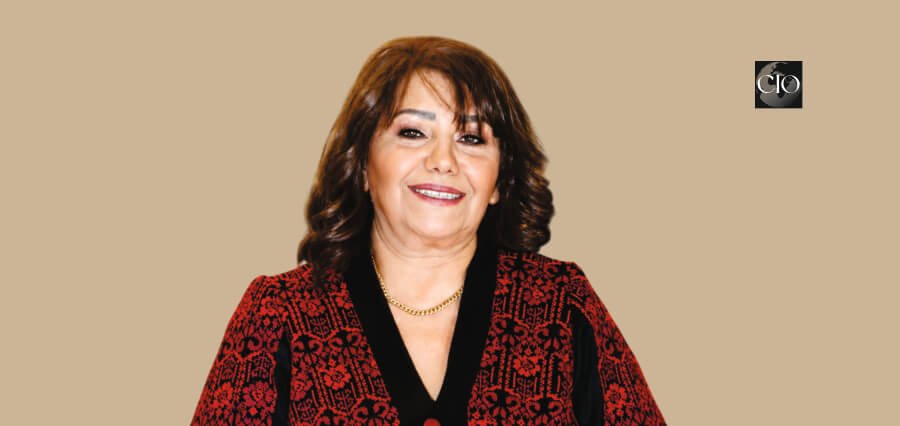
Dr. Raeda AlQussar, General Manager and College Director at Collège De La Salle Frère in Amman, has built a career defined by this breadth of experience. Her journey has taken her from the science classroom to government directorates, quality assurance and teacher training, ultimately leading her to the executive level of one of the region’s established educational institutions.
What distinguishes her is not any single achievement, but the breadth of vantage points she has occupied within a single system, and her ability to translate that breadth into coherent institutional strategy. She approaches leadership as an act of integration rather than delegation, treating academic purpose and administrative structure as two halves of one mission.
Let’s explore how Dr. Raeda’s journey has shaped her approach to educational leadership and institutional excellence!
From the Science Classroom to Educational Leadership
Dr. Raeda’s journey in education did not begin in an administrative office; it began in a science classroom. Trained as a Biology teacher at the University of Jordan, she spent years teaching Biology, Chemistry, and Math and working directly with students at the most fundamental level of learning. That grounding continues to shape her understanding of education and leadership.
An unexpected turn came early in her career when she spent time in the Quality Assurance and Research & Development departments at Dar Al Dawa. Working outside the education sector, inside a rigorous, process-driven industry, exposed her to another dimension of excellence. She learned that “Excellence is not an accident of good intentions, but the product of disciplined systems, measurement, and continuous refinement.”
When she returned to education, she brought that lens with her. Her path then moved through the Ministry of Education across several directorates: Theban, Madaba, and Giza in roles spanning school leadership, curriculum planning, and educational supervision. Each posting exposed her to a different layer of the system, from a single school’s daily operations to province-wide instructional policy.
By the time she completed her PhD in Educational Administration and moved into training and specialist roles at Queen Rania Teacher Academy, and eventually into the position of General Manager and College Director at Collège De La Salle Frère, she had seen education from nearly every vantage point it offers.
That range is central to how she leads today. Rather than viewing administration and education as separate functions, she sees them as interconnected parts of one institution. Her experience in classrooms, government directorates, quality assurance, teacher training, and school leadership has created a leadership perspective that connects academic purpose with institutional execution.
Bridging Academic Vision and Operational Execution
Educational leadership, for Dr. Raeda, requires a continuous balance between academic vision and operational execution. She defines her role as “that of a bridge builder and integrative architect.”
An institution cannot deliver academic excellence without robust administrative scaffolding, nor can operational efficiency justify itself without measurable educational outcomes. This balance therefore shapes the way she approaches both academic and operational responsibilities.
On the academic front, her focus centers on elevating instructional standards, championing competency-based frameworks, and positioning the school principal and leadership teams as true training leaders. She emphasizes modernizing pedagogical methodologies so that students develop critical thinking and adaptability.
Operationally, her role involves establishing clear governance structures, maintaining financial efficiency, optimizing administrative workflows, and ensuring that physical and digital infrastructures fully support educational objectives. By unifying administrative strategy with academic execution, she ensures that operational decisions directly serve the institution’s core educational mission.
This integrative approach becomes particularly important when managing an institution with diverse educational tracks, including national and international programs. For Dr. Raeda, such complexity demands clarity of purpose and structured decision-making.
Her strategic framework rests on four core priorities: student-centered academic rigor, faculty professional empowerment, operational alignment and resource equity, and institutional integrity and heritage.
For her, student-centered academic rigor means prioritizing high learning outcomes and holistic student development across every educational stream. Faculty professional empowerment means investing in structured continuous professional development and empowering educators to act as pedagogical leaders within their departments.
Operational alignment and resource equity ensure seamless alignment between administrative logistics, department budgets, and academic priorities so that every program receives the structural support it requires. At the same time, institutional integrity and heritage require balancing modern innovation with the rich, enduring legacy of Collège De La Salle Frère.
When evaluating complex decisions, she filters choices through these principles, ensuring that “equity, clarity, and excellence govern institutional growth.”
Leading Through Complexity and Change
Leadership is often tested most clearly when circumstances refuse to follow the plan. For Dr. Raeda, two experiences stand out as genuinely formative.
The first was her work with USAID’s CESLI, ESS, and PAP programs at Queen Rania Teacher Academy. Delivering nationally scaled teacher training initiatives under donor-funded frameworks required reconciling multiple sets of expectations at once. These included international program standards, local classroom realities, and the practical resistance that can emerge whenever experienced teachers are asked to change methods that have worked for them for years.
Coordinating those competing pressures across many schools simultaneously taught her an important lesson about change management.
“Successful change is not about issuing directives; it is about translating a program’s intent into something a teacher on the ground can actually use and believe in.”
The second formative experience came while leading the Greek Orthodox Patriarchate School as Principal through a period that demanded constant operational adaptability. Running a school, she explains, means that the plan made in September rarely survives intact through the year. Enrollment shifts, staff continuity, parent expectations, and day-to-day disruptions all have to be managed, often without the luxury of advance notice.
Although the experiences were different, they reinforced the same lesson. “Ambiguity is the real enemy of institutional stability.” For her, data-driven transparency and decisive, empathetic communication are what convert a crisis into a manageable transition.
That philosophy continues to shape her approach to major challenges. She diagnoses the root cause honestly, brings stakeholders into the conversation early, acts decisively, and revisits the decision based on what the data tells the institution afterward.
Building Trust Through Shared Ownership
Within an educational institution, alignment cannot simply be mandated. It must be cultivated through shared ownership of the institutional mission.
For Dr. Raeda, trust is built through consistency, active listening, and structural equity. In a multi-tiered institution, these principles are particularly important because faculty, staff, department heads, and leadership teams must understand how their individual responsibilities contribute to institutional success.
She fosters alignment by establishing clear channels of communication and embedded professional structures, such as Professional Learning Communities (PLCs). These structures help shift the culture from administrative oversight toward collaborative leadership, empowering department heads and academic leaders to co-create strategic goals rather than simply execute directives.
Recognition also plays an important role. She prioritizes transparent performance recognition and celebrates institutional achievements, including major graduation milestones and national events as collective victories.
When staff members see that their professional growth is valued and that their contributions directly impact institutional success, trust becomes the default culture. In this environment, accountability and collaboration are not competing principles; they reinforce one another.
Making Continuous Learning Part of the Institution
In an era of changing educational expectations, remaining relevant requires leaders to continue learning themselves. Dr. Raeda holds herself to the same standard of continuous learning that she asks of her faculty.
Over the years, she has pursued training well beyond the standard credential track, completing a module through the Harvard Graduate School of Education’s Leading Learning program, earning certification as a Professional Trainer through Boston College’s LEAD Academy, and training in the Thinkers Keys model for innovation and creative thinking.
These experiences were not pursued simply as additional credentials. As she explains, “I didn’t pursue these to add letters after my name; I pursued them because staying current as a leader is the only credible way to ask your institution to stay current.”
She believes that philosophy shapes the way professional development operates at Collège De La Salle Frère. It is not treated as a once-a-year formality but built into the rhythm of the institution. Structured training in areas such as project-based learning and inclusive learning environments gives educators opportunities to strengthen their practice, while exposure to international forums and conferences keeps the leadership team connected to global educational thinking rather than working in isolation.
When a leader visibly keeps learning, it becomes easier to build a culture where the entire faculty does the same.
Accountability as a Standard of Excellence
For Dr. Raeda, accountability is most effective when it is viewed not as a punitive measure, but as a professional standard of excellence.
She establishes this culture by setting clear performance metrics, streamlining operational protocols, and modeling accountability at the executive level. Systematic performance feedback loops, regular departmental reviews, and structured self-assessment models are utilized across administrative and teaching faculties.
The objective is not simply to measure performance, but to create the conditions that allow people to take ownership of it. When expectations are explicit and accompanied by the necessary resources and professional development, staff members are equipped to take full responsibility for their roles.
In this context, she explains that “Continuous improvement becomes a natural habit.” Success is systematically measured, acknowledged, and built upon year after year. Accountability therefore becomes part of institutional culture rather than an occasional response to performance concerns.
Leadership That Engages with the Harder Questions
Formal recognition has its place in Dr. Raeda’s career. Awards such as the Global Excellence in Transformative Educational Leadership award matter to her. Yet what she values most is research and work that engages with the harder questions the field often avoids.
Her research and publications have explored subjects extending beyond conventional school administration, including curriculum policy in the context of terrorism, the intersection of social media and extremism, and the quality of education for displaced and asylum-seeking populations.
These are not comfortable topics, and they do not fit neatly into a typical administrator’s portfolio. Yet she believes education leaders have a responsibility to engage with the world students actually live in, rather than an idealized version of it.
Her PhD thesis on the functions of the governmental school principal within the knowledge economy grew from the same instinct: a desire to understand leadership not just as a role, but as a mechanism that either enables or obstructs an entire system’s ability to adapt.
Alongside this scholarly work, however, some of the most meaningful moments remain deeply human. Presiding over graduation ceremonies and watching generations of students leave institutions equipped with both intellect and character remains, without question, the most enduring reward of her career.
Sustaining Leadership Through Balance
Executive leadership in education is an intensive journey that demands physical, mental, and emotional endurance. For Dr. Raeda, maintaining balance requires strict personal discipline, effective delegation, and emotional resilience.
She manages leadership pressures by maintaining structured boundaries and relying on high-performing, well-aligned administrative teams. Trusting department leaders with operational autonomy allows her to maintain focus on strategic oversight without becoming bogged down in micromanagement.
This approach also reinforces the wider leadership philosophy she has developed throughout her career: strong institutions are not built around one person managing every detail. They are built through capable people who understand their responsibilities, have the necessary autonomy, and remain aligned with the institutional mission.
On a personal level, she prioritizes intellectual renewal, family time, and moments of reflection. She notes that “Understanding that an executive’s clarity of thought directly impacts an entire institution makes self-care and mental discipline essential components of responsible leadership.”
A Legacy of Excellence and Institutional Agility
Looking ahead, Dr. Raeda’s long-term vision for Collège De La Salle Frère is anchored in sustaining its legacy as a benchmark of educational excellence, character formation, and institutional agility.
She envisions an institution that seamlessly fuses modern pedagogical strategies with deep-rooted moral values, preparing students to lead confidently on world stages. This vision does not require choosing between heritage and innovation. Instead, it calls for ensuring that modern advances remain grounded in the institution’s foundational values.
The impact she hopes to leave through her leadership is equally institutional and enduring: a highly empowered teaching body, modernized administrative operations, and a sustainable culture of academic rigor.
Her ambition is to be remembered as a leader who elevated standards, mentored future educational leaders, strengthened operational integrity, and ensured that Collège De La Salle Frère continues to serve as a beacon of transformative education for generations to come.
At the heart of this vision is a leadership philosophy shaped by experience across classrooms, administrative systems, teacher training, educational policy, and institutional management. It is a philosophy that recognizes that lasting educational excellence depends not on isolated achievements, but on the strength of the systems, people, values, and learning culture that sustain them.
For Dr. Raeda AlQussar, leadership ultimately means bringing these elements together: academic rigor with operational discipline, innovation with heritage, accountability with trust, and institutional ambition with the needs of students and educators.
Her journey from the science classroom to the General Manager and College Director position has reinforced a simple but powerful understanding: education is one institution viewed from different altitudes. The responsibility of leadership is to ensure that every altitude remains connected, every decision serves the mission, and every generation leaves better prepared for what comes next.