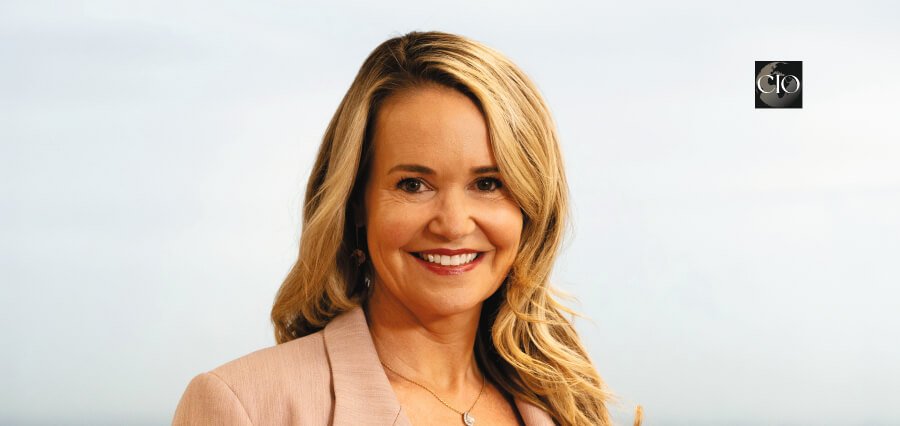
Somewhere in Queensland, a pathology laboratory processes diagnostic results through the southern hemisphere’s largest single-instance public health LIMS. Across the UK, 80 percent of NHS Trusts are operating Magentus systems to maintain diagnostic services of millions of patients. A national pathology framework is emerging in Scotland that will change the way the health system handles laboratory data in the country. And across Australia, thousands of clinical specialists open Magentus software each morning to run the working part of their job.
Behind it all, Rachael Powell, CEO of Magentus – named one of TIME Magazine’s Top HealthTech Companies of 2025 – , asks the same question she has carried since childhood: What exactly does this technology do, who does it benefit, and how can we use it to make the world a better place?
Rachael Powell does not ask that question rhetorically. It is the organizing principle of her way of leading, the prism through which she evaluates acquisitions, the test by which she judges product decisions, the yardstick by which she assesses all the different operations conversations within her team.
She has the experience of being raised in a family of clinicians and internalised the stakes of patient care before she could name them. She brought that foundational understanding into a technology career, including over a decade at IBM eight years of developing Xero’s customer organisation worldwide. She has now spent almost two years in the CEO chair of a business whose systems are embedded in the diagnostic journeys of millions of people across various continents.
It is not a coincidence that the gap between a clinical household where she grew up and the head of one of the most important digital health businesses in Australia is relatively small. It’s a serendipitous result of where her life experiences have led and her purpose to help the world be a better place.
Shaped by Purpose
To understand how Rachael Powell leads today, it helps to trace the experiences that built her. Over a decade at IBM taught her the architecture of enterprise complexity, specifically the gap between what large technology systems promise and what they actually deliver when they meet the real world. That gap, and the discipline required to close it, became foundational to how she thinks about execution.
“At IBM I learned about the complexity of large enterprise systems and how to bridge the gap between what technology promises and what it delivers,” she explains.
Xero added a different and equally formative dimension. Rachael Powell spent eight years building Xero’s customer organization globally, watching a company take financial software, a category most people found intimidating and impersonal, and transform it into something users genuinely loved. What Xero taught her was not simply about product design. It was about the relationship between employee experience and customer success, and how purpose-driven culture translates into outcomes that have a human ripple effect from the inside of the company out through the entire ecosytem of partners and customers around the world.
“Xero genuinely changed the lives of people working in small business all around the world. That experience has permanently shaped how I think about culture, product, and what success actually looks like,” she mentions.
Both chapters reinforced a conviction she carried from childhood: that technology is only as meaningful as the human need it serves. And that technology enables transformation, but it is the people who create the innovation and lead the change. That conviction has never been more consequential than it is now, at the helm of a company whose systems sit inside the diagnostic pathways of millions of patients.
The Connected Care Vision
Magentus does not describe itself as a single-product company. It describes itself, through Rachael’s strategic framing, as the technology infrastructure through which pathology, radiology, oncology, practice management, and health informatics connect to each other, reliably and at scale. That vision of connected care is both the company’s commercial ambition and its clinical purpose.
“Our long-term strategic goal is to function as the technology infrastructure through which pathology, radiology, oncology, practice management, and health informatics talk to each other, reliably and at scale,” she says.
Translating that vision into daily decisions requires two disciplines that Rachael Powell practices with visible consistency. The first is ruthless prioritization. Healthcare technology always presents more opportunities than any organization can pursue simultaneously, and the leaders who try to chase all of them deliver none of them well. Rachael keeps her team anchored to a single diagnostic question: will this meaningfully advance outcomes and trust? What do we need to do now, next and later. Everything else, however compelling it appears in isolation, gets deprioritized.
The second discipline is keeping the why alive inside operational conversations. How can we create organizational clarity and alignment and ensure we have the right capability to drive the change required? Implementation discussions, procurement processes, and budget reviews carry a gravitational pull toward abstraction, toward timelines and deliverables and system specifications. Rachael Powell deliberately pulls those conversations back toward the patient pathway that exists on the other side of every contract. That habit is not sentiment. It is strategy based on customer centricity.
High-Stakes Decisions, Clear Principles
Healthcare is structurally a high-stakes environment. Rachael Powell operates across regulated systems where errors carry clinical consequences, where trust is built over years and lost in moments, and where the complexity of multi-jurisdictional health infrastructure resists the kind of fast decision-making that technology companies often celebrate.
Her response to that environment is what she calls calibrated caution: deliberate movement, backed by clear decision filters that prevent complexity from becoming paralysis.
“Any acquisition, any partnership, any product direction needs to advance the connected care model in a way that is fit for now and for the future. That filter simplifies what could otherwise become very complicated decisions,” she explains.
The acquisition of Labflow late last year illustrates this principle in practice. On the surface, the decision carried real complexity: a cross-market, modern technology cross-platform move that extended Magentus into pathology settings it had not previously served, across geographies including India, Malaysia, and Singapore. A different leader might have seen an unacceptable level of risk.
Rachael Powell saw the underlying logic clearly. Labflow’s cloud-native, modular architecture served a segment of the pathology market that complemented Magentus’s enterprise LIMS offering. The technology had been validated in real clinical environments. Demand in the target markets was already evidenced. The strategic fit was genuine and the technology was advanced. What appeared complex on the surface resolved into a decision where clinical logic, technological validation, and strategic alignment all pointed in the same direction.
Culture Built on Clarity
Culture, in Rachael’s framework, is not a program. It is an accumulation of daily choices, in hiring, in how feedback is delivered, in what gets celebrated, and crucially, in what gets tolerated. Her role as CEO is to establish the clarity from which everything else flows and then build the leadership team capable of carrying it through the organization.
“Culture emerges over time from hundreds of daily choices. My role is to create the strategic clarity and then build the right team of leaders that play to their strengths, portray the values and lead by example to align our vision and purpose right through to execution of day-to-day activities,” she says.
She hires for judgment rather than capability alone, on the basis that skills can be developed but the capacity to make sound calls in ambiguous situations is harder to teach. The modern leader, she believes, must be a genuine change agent, comfortable with uncertainty and skilled at bringing others through it. Agency follows from clarity: when people understand the destination, they can navigate their own route toward it, and accountability becomes an intrinsic motivator of that ownership, rather than an external imposition.
The challenge at Magentus carries an additional dimension. The company has brought together multiple legacy businesses with proud independent histories, each of them having earned the trust of their markets over decades. Building a unified culture requires both respecting what came before and making space for what comes next. Rachael Powell manages that tension deliberately, celebrating progress while honoring heritage and carrying that accumulated trust forward.
Sponsorship Over Mentorship
When the conversation turns to leadership development, Rachael Powell makes a distinction that reveals how seriously she takes the subject. She prefers to talk about sponsorship rather than mentorship, and the difference is consequential.
“Sponsors don’t just guide, they lean in and help create the conditions for advancement and leadership. They focus on consequential delegation of meaningful work, with real backing,” she asserts.
She watches for leadership potential through signals that standard performance metrics miss. How someone responds when things go wrong tells her about resilience and self-awareness. How they treat people who cannot do anything for them tells her about character. She looks for the quiet capable achiever who, given real responsibility, becomes remarkable. She is alert to the person whose confidence resembles capability right up until they face a genuinely difficult decision that paralyses their thinking or struggle to lead others through change.
At Magentus, this approach to developing leaders carries strategic weight beyond the immediate. The company is expanding across geographies, building capabilities in markets that did not previously exist in its portfolio, and the leaders being developed today will run parts of the business that have not yet been created. Rachael Powell invests in them accordingly.
Transparency as Operating Mode
At a company simultaneously navigating the NHS regulatory environment, the Australian private health market, multiple active implementations, and a series of acquisitions, change is not a periodic disruption. It is the permanent operating condition. Rachael Powell has built her leadership approach to reflect that reality.
“Transparency has to be a continuous working mode, not a response to events. An early honest conversation about the change required, with significant emphasis on the why and clarity on the path forward, always beats an upbeat papering over of the cracks,” she mentions.
Her partnership with the Cheshire and Merseyside Pathology Network demonstrates what that commitment looks like in practice. Rather than operating as a conventional customer-supplier relationship, Magentus and the Network have functioned as a single integrated delivery team from the outset, reshaping diagnostic services for 2.7 million people across five NHS Trusts and 16 sites. Shared buy-in, continuous engagement, and genuine transparency about complexity and expectations has resulted in a partnership that has become a model for others and recognized with nomination in various partnership awards. She has also done the harder personal work of unlearning the habits that early career success can embed. The instinct to add value in every room, to have the answer ready before the question finishes, is one that many high-performers carry for too long. Rachael Powell has learned to pause, to listen for the idea that is still forming, and to conduct the orchestra rather than play every instrument.
“I need to conduct the entire business – not be the master of all trades. I can’t claim to have fully mastered it, but I have learned the value of curiosity and the importance of having diversity of strengths and experience around the table,” she reflects.
A Legacy Written in Systems and People
When Rachael Powell describes the legacy she hopes to leave, she speaks at two levels simultaneously, and both matter equally to her. The first is systemic. Healthcare faces pressures that show no sign of easing: workforce constraints, rising chronic disease burden, ageing populations, and an expectation that digital infrastructure should genuinely connect clinical systems rather than simply digitize existing processes. Magentus sits inside that challenge as both responsibility and platform, with data flowing through its systems at a scale that carries real potential to improve population health outcomes.
“We have a plethora of data running through our platforms and we have an opportunity to play a significant role in leveraging that asset to create a healthier society,” she says.
The second level is personal. Rachael Powell measures her success as a leader not by the systems Magentus has built or the markets it has entered, but by the people she has developed along the way.
“I will know that I have succeeded if I have left behind a generation of leaders who can go on and lead large teams that continue to drive technological change that makes the world a better place to live,” she asserts.
Rachael Powell arrived in healthcare technology carrying a childhood spent around clinicians and a career spent seeing the power or purpose when human leadership and technology are brought together at scale. At Magentus, she is building the answer: a suite of technology products that will help transform clinical care now and in the future, a team of passionate players who are driven to drive the change the industry requires, and the right questions that continue to bring the customer to the heart of all decisions made.