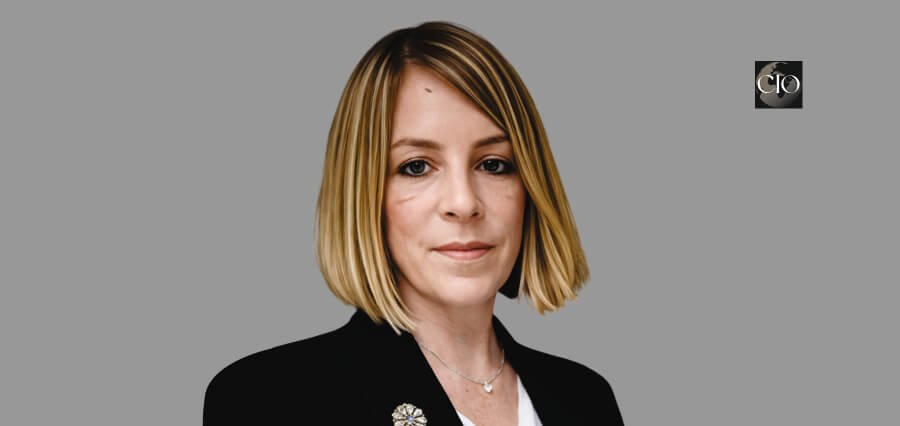
Medicine, to be honest, is not practiced in consultation rooms. It is practiced along the winding roads of Neamt County, where a physician with four decades of experience drives her patients rather than waiting for them to find their way to her. It is practiced in the homes of elderly patients managing complex medication regimens alone, in the living rooms of families quietly reorganizing around chronic illness, and in the communities where the gap between a doctor’s willingness to show up and a patient’s ability to travel can entirely determine the quality of care received. Most physicians understand this gap in theory. Very few do anything about it. Fewer still build an entire career and an entirely new model of care around closing it.
Dr. Sofica Bistriceanu, MD, PhD, is one of those rare few. As the Family Physician at Academic Medical Unit – CMI, she has spent decades not just practicing family medicine but actively reinventing it. Her journey from a newly graduated physician in 1984 to a pioneer of the medical home model is a story about intellectual courage, professional independence, and an unwavering conviction that the best medicine begins with truly seeing the patient, not just the condition. In a field where convention tends to reward compliance, Sofica built something genuinely different, and the patients whose lives she has shaped are the proof.
A Foundation Built on Four Decades of Firsts
Dr. Sofica Bistriceanu graduated from the Faculty of General Medicine at the University of Medicine and Pharmacy “Gr. T. Popa” in Iasi in 1984, entering a profession that would demand everything she had and then ask for more. She gave it willingly. From the beginning, she approached medicine not as a fixed discipline to be applied but as a living field to be continually questioned, refined, and improved.
She completed an international training research program in family medicine, an experience that broadened her clinical perspective and deepened her commitment to evidence-based, patient-centered care. Then, when family medicine was formally introduced in Romania as a recognized specialty, Dr. Sofica Bistriceanu did not wait for systems to be built around her. She built her own practice, starting with a patient base that had already chosen her as their physician and working under a contractual relationship with the national health system.
That founding moment revealed something essential about her character. She did not simply join an emerging system. She helped shape it, bringing with her a professional standard she had spent years building and a vision of family medicine that went considerably beyond what the system around her was yet prepared to accommodate.
The Decision That Changed Everything
Every physician reaches a moment when the gap between the medicine they practice and the medicine they believe in becomes impossible to ignore. For Dr. Sofica Bistriceanu, that moment arrived, and she responded with a decision that would define the next chapter of her career.
She shifted the delivery of medical services from the office to the patient’s home. What sounds like a logistical adjustment was, in practice, a fundamental reimagining of the doctor-patient relationship. She created the medical home model, a private-practice framework that placed the physician within the patient’s lived environment rather than requiring the patient to navigate to a clinic.
The implications were far greater than improved access. By entering the patients’ home, Dr. Sofica Bistriceanu gained access to a category of clinical data that is simply invisible during a standard office visit: the real texture of a patient’s daily life, their family dynamics, their living conditions, their routines, and the social environment in which their health conditions develop and progress. “I proposed a new theory and insights on disease onset and progression to the international medical community for reflection.” she notes, a statement that understates what was, by any measure, a clinically significant contribution to the field.
She also collaborated with local ambulance services during this period, extending her reach to those whose conditions demanded immediate attention, but who could not easily access formal care settings. The model she built was not a compromise. It was a more complete version of what medicine can be.
From Practice to Institution
In 2013, the clinical and intellectual body of work Dr. Sofica Bistriceanu had accumulated earned formal recognition when her practice was renamed Academic Medical Unit – CMI Dr. Bistriceanu, S., a designation that reflects the institution’s commitment not only to delivering care but also to advancing the thinking that underpins it.
Today, the practice operates through multiple access points, serving patients wherever they are and in whatever circumstances they face. Patients can opt for home visits on a fee-for-service basis, which provides those who value personalized in-home care. Dr. Sofica Bistriceanu also offers free medical services at medical centers, typically on weekends and after standard operating hours, ensuring that cost and convenience never become barriers to quality care. She further expanded her reach through collaborations with private clinics and public medical centers, ensuring continuity across different care environments.
The structure she has built reflects a deliberate philosophy: access to quality medical care should not depend solely on a patient’s ability to pay or their proximity to formal healthcare institutions. She designed her practice to serve both those who can afford premium private care and those who rely on the public system, maintaining the same standard of attention and expertise across both.
Innovation Rooted in Observation
Ask Dr. Sofica Bistriceanu where innovation comes from, and she gives a deceptively simple answer. “Innovation originates in observation.” She does not reach for frameworks or methodologies. She reaches for the most fundamental tool available to any physician: paying close attention to what is actually in front of you.
In her practice, continuous comparison of data drives new thinking. By observing patterns across thousands of patient interactions, including home visits and clinic consultations, and across the full spectrum of life circumstances her patients navigate, she generates insights that no single office-based encounter could produce. She takes those insights outward, sharing ideas with experts worldwide, and adapting international knowledge to the specific realities of her patients’ lives.
This commitment to innovation extends into her adoption of digital health tools. She runs her practice on a hybrid care model that combines in-person visits with e-visits, e-follow-ups, e-prescriptions, and e-collaboration with specialists across disciplines. She actively empowers her patients to participate in their own health management, including self-monitoring of vital signs, adjusting medication dosages when appropriate, and knowing when to seek specialist input. She integrates virtual assistants and online health promotion resources into her practice, tools that reduce physician workload and help prevent the burnout that has become a defining crisis in healthcare systems worldwide.
A Leadership Philosophy Anchored in Fairness
Dr. Sofica’s leadership reflects the same clarity and precision that define her medical practice. She built an independent practice specifically because it gave her the freedom to choose her collaborators with care, to build a team defined by preparation, honesty, kindness, and loyalty, qualities she considers non-negotiable in any professional environment that aspires to deliver excellent care.
Her leadership philosophy is grounded in fairness. She makes decisions that are equitable, accepts suggestions for improvement from her team, ensures compensation that reflects the demands of each role, and recognizes exceptional performance with genuine acknowledgment. She places the right people in the right positions, not simply those who are available or convenient.
On the question of errors, she draws a distinction that reflects real wisdom. She accepts minor mistakes as an unavoidable part of human professional life, judges unintentional errors with moderation, and addresses major intentional errors with a cool head rather than an emotional one. She leads without arrogance, a quality she regards as incompatible with genuine leadership. “A leader must be respected, respect each team contributor, be kind, and be generous, when possible,” she says. These are not aspirational values displayed on a wall. They are the operating principles of how she runs her practice every day.
Navigating Challenges with Clarity
Dr. Sofica Bistriceanu does not speak about the challenges she has faced as a woman in leadership with bitterness. She speaks about them with clinical precision: a clear diagnosis, a clear response, and a clear boundary.
She identifies collaboration with dishonest or inadequately prepared people as the primary source of professional difficulty. Her response is neither passive nor combative. She does not tolerate inappropriate behavior from any party in a professional relationship. She ends the collaboration, protects her practice environment, and rebuilds with people who meet the standard she has set. This is not avoidance. It is discernment. Dr. Sofica Bistriceanu has consistently demonstrated that willingness throughout her career, and the quality of her practice reflects that.
Resilience as a Practice
Four decades in medicine, much of it spent pioneering approaches the system around her had not yet caught up to, demand a particular kind of resilience. Dr. Sofica Bistriceanu maintains hers through deliberate attention to the full breadth of her life, not just her professional role.
She balances clinical demands with walking, listening, attending lectures, engaging with art, watching films, and spending time with the people she loves. These are not indulgences. They are the inputs that sustain the clarity and creativity her work requires. The principle she returns to under pressure comes from a source older than any medical textbook: “Do not harm,” a directive she carries into every aspect of her professional and personal conduct.
Her definition of success reflects this wholeness. True success, in her view, produces what she describes as a white light in the inner world, a state of peace that makes all good intentions for others genuinely effective. Her advice to anyone facing difficulty carries both compassion and clarity: “Be wise enough to overcome all barriers and shine again.”
What She Tells the Women Coming After Her
When Dr. Sofica Bistriceanu speaks to the next generation of women aspiring to lead, she does not offer abstract inspiration. She offers specific, hard-won principles tested against the reality of building and sustaining a medical institution across decades.
Choose your collaborators with care, she says. Honesty, preparation, and kindness are not optional in the people around you. They are the foundation of every professional environment worth building. Do not exhibit arrogance, which she regards as corrosive to both leadership and professional relationships. Make earning your community’s respect, admiration, and trust a genuine goal, not a byproduct of ambition. These principles define a model of leadership that prioritizes depth over visibility and integrity over optics.
A Legacy Rooted in Truth
When asked what legacy she hopes to leave, Dr. Sofica Bistriceanu responds with a thought that transcends professional achievement entirely. “Truth never disappears. When some people try to obscure it, an impartial judge that transcends humanity makes it appear even clearer.”
It is a statement that carries the weight of a career spent doing things the right way when the easier path was available. She did not choose conventional practice when she saw a better model. She did not accept dishonest collaborations when they became professionally comfortable. She did not shy away from the intellectual risk of proposing new theories to the international medical community.
More than forty years after she first entered medicine, the evidence of that belief surrounds her: a practice grown into an academic institution, a model of home-based care that expanded the field’s understanding of how the environment shapes health, a patient community that has trusted her across generations, and a professional life built entirely on her own terms. That is what it looks like when a physician leads not only with expertise but also with vision, integrity, and the quiet courage to see what medicine could be and then spend a lifetime making it so.