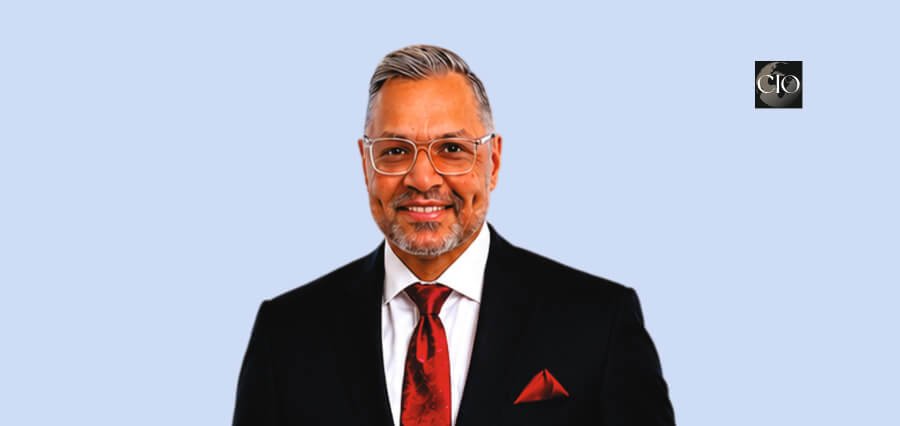
In a world where leadership is often measured in metrics and quarterly targets, there are few who stop asking a different set of questions entirely. Not “How productive is your team?” but “Do they know what they are capable of becoming?” Not “Are your numbers up?” but “Does your leadership reflect who you truly are?” These are the questions that have shaped one man’s life’s work, and the ones that continue to transform the executives, graduate students, and aspiring leaders who sit across from him in the coaching chair.
His name surfaces repeatedly in conversations about emotional intelligence, executive presence, and the kind of leadership development that actually changes people. Leadership academies and C-suite leaders at Fortune 50 firms have felt his influence. Graduate classrooms have been shaped by his unique approach to education and forward thinking. Academic journals and popular press periodicals inform and propagate his research. And yet, when you ask Dr. Emmanuel V. Dalavai what drives him, he answers without hesitation: the moment a leader discovers what they did not know they were capable of. He says, “The opportunity to empower others, to help them see what they are capable of becoming, remains the driving force behind my work.” That conviction, deeply personal and rigorously practiced, forms the spine of everything Emmanuel does.
A Calling, not a Career
Dr. Emmanuel V. Dalavai does not describe his path into leadership development as a strategic career choice. He describes it as a calling, one that took shape gradually through years of observation, reflection, and a growing awareness of what organizations truly need to thrive: blending both the art and science of leadership. One leader who had the opportunity to work with Dr. Emmanuel V. Dalavai sums it up this way: “You can tell that ‘Dr. D.’ likes to blend the art and science of coaching; it’s what he excels at. It’s not just enough to bring theory into the mix. Rather, it is equally, if not more, important to bring practical application of theory into the business as well.”
From the earliest stages of his professional life, he found himself drawn to moments of human transformation. He watched leaders discover their strengths. He saw cultures shift when those at the top chose to lead with empathy rather than authority. He noticed that the most enduring organizational change did not begin with a new strategy document. It began with a leader who chose to grow. He highlights, “Whether in the classroom, the boardroom, or the coaching space, I witnessed how a single insight, a shift in mindset, or a renewed sense of confidence could transform not only a leader’s performance but also the culture and communities they influenced.”
Dr. Dalavai’s work is rooted in the principles of positive organizational scholarship and positive psychology, frameworks that center on leveraging strengths to build hope, efficacy, resilience, and optimism. These are not abstract ideals. They are, in his hands, practical tools that leaders apply to real problems in real organizations. He explains, “People flourish when they are seen, supported, and challenged to grow.” Over time, that belief evolved from personal conviction into a professional vocation: to help leaders cultivate emotional intelligence, strengthen their executive presence, and develop the adaptability required to navigate complex environments.
The Science Behind the Coaching
Rarely does Dr. Emmanuel V. Dalavai take a surface-level approach to coaching, unless absolutely necessary. He brings a rigorous, neuroscience-informed framework to almost every engagement, one grounded in the principles of the International Coaching Federation and the NeuroLeadership Institute, both of which emphasize brain-based methods for behavior change.
Through this lens, he helps leaders understand something that most leadership programs overlook how the brain processes stress, feedback, and interpersonal dynamics. He mentions, “I help leaders understand how their brains process stress, feedback, and interpersonal dynamics, enabling them to make intentional choices rather than reactive ones.” When leaders are interested in science, and then better understand their own neurological patterns, they stop reacting and start choosing. That shift, from reaction to intention, is in Dr. Dalavai’s view the foundation of genuine leadership.
His coaching model focuses on three core dimensions of leadership capability: emotional intelligence, executive presence, and situational adaptability. Each dimension builds on the other, forming a complete framework for leaders who want to grow in both capability and character. He says, “Coaching is not about providing answers; it is about creating the conditions for insight, clarity, and transformation.” That philosophy shapes every conversation Dr. Emmanuel V. Dalavai brings to the coaching space.
The Challenges Leaders Actually Face
In his work with leaders across industries, Dr. Emmanuel V. Dalavai has encountered a consistent truth: leadership is demanding not because of the strategy or the spreadsheets, but because of the human dimensions that no business school fully prepares you for.
He speaks candidly about the challenges he sees most often. Navigating ambiguity is one thing. Leaders routinely make high-stakes decisions without complete information, and the psychological weight of that reality can be crippling without the right internal resources. He mentions, “The weight of responsibility, especially during organizational change, can strain even the most seasoned leaders. “Managing emotional labor, imposter syndrome, perfectionism, and fear of failure are limiting beliefs that quietly undermine even high-performing leaders.
As workplaces grow more global and multicultural, cultural intelligence and communication agility become nonnegotiable leadership skills. And in moments of crisis or conflict, the ability to regulate emotion and project steadiness becomes the difference between a leader who steadies the room and one who unsettles it. He explains, “Maintaining executive presence during conflict, crisis, or scrutiny requires emotional regulation and self-awareness.”Dr. Emmanuel V. Dalavai does not offer easy answers. He offers something rarer: a structured process for building the inner architecture that great leadership requires.
Staying Ahead Without Losing Ground
In a landscape where leadership expectations shift as fast as technology is reshaping workplaces, Dr. Emmanuel V. Dalavai has developed a clear discipline for staying relevant. He reads and researches with a voracious appetite. He listens closely to the executives, graduate students, and mentors he’s surrounded by, treating these interactions as invaluable data about what organizations need right now.
He stays engaged with emerging scholarships in emotional intelligence, neuroscience, and leadership development. He integrates insights from real-world client engagements, ensuring his methods remain grounded rather than theoretical. He embraces digital tools, virtual coaching platforms, and data-driven assessments as precision instruments that expand both the reach and the depth of his work. He says, “Remaining ahead requires humility, curiosity, and a commitment to lifelong learning, qualities I strive to model for the leaders I serve.”
But perhaps most importantly, he models the very behavior he coaches. His own advanced degrees and specialized certifications reflect a belief that learning is not a phase in one’s career. He highlights, “Lifelong learning also cultivates humility, the recognition that no matter how much we know, there is always more to discover.” For Dr. Emmanuel V. Dalavai, the coach and the human being, they are always evolving.
Milestones Measured in Transformation
Ask Dr. Emmanuel V. Dalavai to name his most meaningful professional milestones, and he does not immediately mention awards or credentials. He reaches for his coachee’s most prized moments. As one of his satisfied clients said, “Having worked with Dr. Emmanuel V. Dalavai for nearly three years, I can confidently attest to his profound impact on my professional growth in healthcare. He didn’t just influence my career—he reshaped my mindset to sustain transformational change, particularly by introducing me to the concept of the four intelligences.”
Becoming an executive coach marked a turning point, the moment when his passion for leadership, psychology, and human development converged into a coherent professional identity. His academic appointments followed, bringing with them the profound privilege of shaping the next generation of leaders through teaching and mentoring at the graduate level. He has published research and contributed thought leadership on emotional intelligence, executive presence, and coaching, work that influences conversations beyond the coaching room and into the broader scholarly community.
His speaking engagements have carried those ideas to corporate, academic, and community audiences, amplifying a mission rooted in empathy, optimism, and positive leadership. He mentions, “The most meaningful milestones are often the quiet ones: the breakthroughs, the renewed confidence, the leaders who discover their voice and purpose.” Says Dr. Emmanuel V. Dalavai, “These moments affirm that leadership development is not just a profession. It is calling.”
The Philosophy Behind the Practice
Dr. Dalavai’s leadership philosophy did not arrive fully formed. It evolved, through years of coaching, teaching, organizational experience, and from the ‘school of hard knocks.’ It also came from notable influences in his life such as his late mother, Jaya Dalavai, his father, the elder Dr. Jay Dalavai, his longtime mentors, Dr. Ron Yamamoto and Mike/Karen May, as well as his sister, Leona. Early in his career, he believed leadership was primarily about competence, strategy, and execution. He says, “Over time, I came to understand that leadership is fundamentally about presence, connection, and influence.” But then, after reading Dr. Daniel Goleman’s epic work on emotional intelligence, it revolutionized how he approached leadership development. He now lives and coaches from that understanding every single day.
Five core values guide his approach: continuous learning, empathy, integrity, optimism, and service. Each reflects not only his professional philosophy, but also his deep personal commitment to showing up fully for the people he serves. He mentions, “These values reflect not only my professional credo but also my personal commitment to using my God-given gifts to coach, train, and develop leaders and aspiring leaders.” Faith, in his telling, is not separate from his professional work. It serves as a key anchor.
Balance as Part of His Leadership Philosophy
Dr. Emmanuel V. Dalavai is direct about something that many in the coaching world underplay in that you cannot pour from an empty vessel. Supporting leaders through their growth requires emotional presence, intellectual energy, and sustained focus, and none of those resources are infinite. He highlights, “Just as I encourage leaders to leverage their strengths, I remain mindful of my own, using them to stay energized and aligned.”
Tennis, and other athletic pursuits, keep him physically renewed and mentally clear. Faith grounds his sense of purpose and replenishes his calling. Intentional boundaries around rest, reflection, and family protect the inner life that his work demands. He says, “Well-being is not a luxury; it is a prerequisite for effective leadership and coaching.” The coherence between what Dr. Emmanuel V. Dalavai teaches and how he lives is itself part of what makes him credible to the leaders he guides.
The Road Ahead
Dr. Emmanuel V. Dalavai looks forward to ongoing clarity and measured ambition in life. He wants to advance emotional intelligence research, helping more leaders move beyond the concept and into the science and daily practice behind it. He wants to elevate executive presence training, equipping individuals with the skills to lead with clarity, confidence, and contextual power in any room they walk into.
He plans to grow his thought leadership through publishing, writing, and speaking, carrying his ideas into global conversations on leadership and emotional well-being. He remains committed to coaching, teaching, and mentoring individuals who will shape the organizations and communities of tomorrow. He mentions, “I am committed to using my platform to advocate for leadership grounded in empathy, resilience, and hope.” He highlights, “Leadership is one of the most powerful forces for positive change, and that developing leaders is both a responsibility and a privilege.” These are not the words of someone who chose a profession. They are the words of someone who answered a call, and who, every day, chooses to keep answering it.